

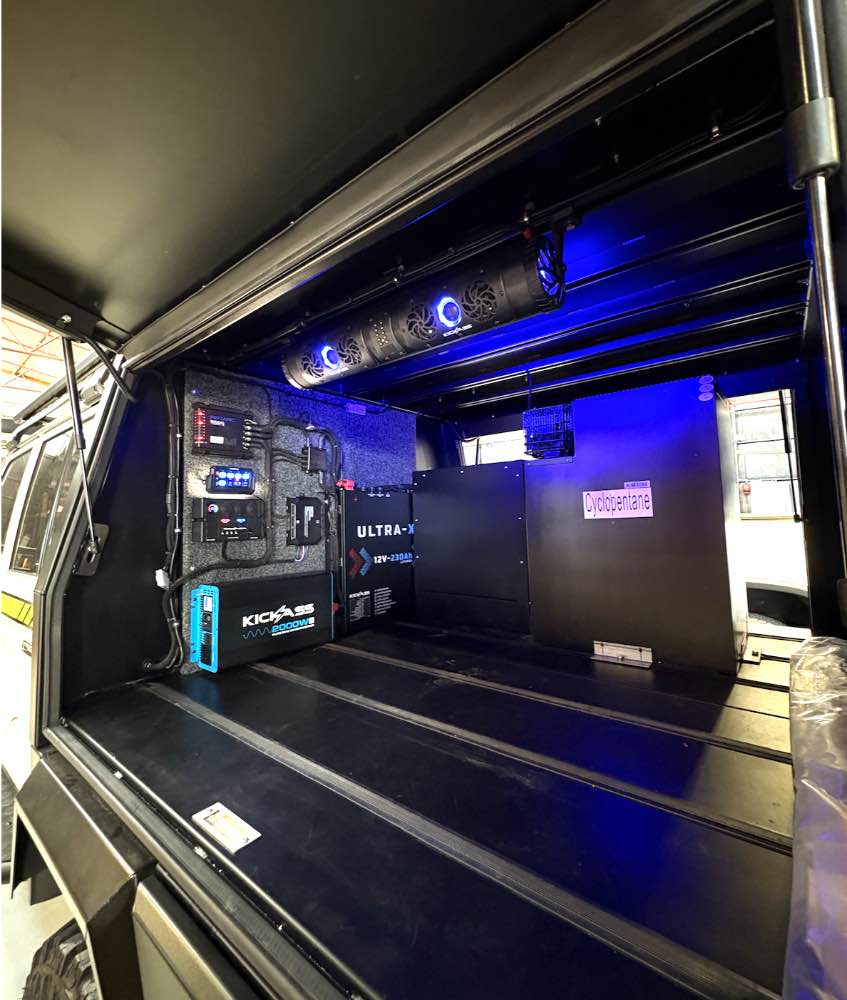
The trick is not cramming every possible accessory into the canopy. It is building the system around what you actually use at work. If you are planning a complete ute canopy fitout, the electrical system should be considered alongside storage, lighting, communications and the way you use the vehicle each day.
Quick summary
- A work ute 12V canopy setup should be designed around the equipment you need to run, how long it operates and how often the vehicle is driven.
- A dual battery system allows work accessories to use an auxiliary battery instead of relying on the vehicle’s starter battery.
- An inverter can provide power for compatible 240V equipment such as cordless tool battery chargers and laptops.
- Battery monitoring helps you keep track of the auxiliary system during the working day.
- Canopy lighting, accessible outlets and sensible switch positions can make the ute much easier to work from.
- Solar can help when the vehicle spends long periods parked rather than driving.
- Starlink, UHF, work lights and an air compressor can be incorporated for remote, civil and field service work.
- Plan the complete electrical load before choosing the battery, inverter and charging equipment.
What should a 12V canopy setup include?
A 12V canopy setup should include the equipment needed to safely store, charge, monitor and distribute power around the ute. The exact combination depends on what you run during a normal working day.
An electrician charging cordless tools has different power requirements from a mobile mechanic running diagnostic gear, work lights and an air compressor. A surveyor spending hours on remote sites may put more emphasis on solar, communications and laptop power.
A practical 12V canopy setup
Build the electrical system around what the ute needs to power each day, not around how many accessories you can squeeze onto a switch panel.
Auxiliary battery
Stores power separately from the starter battery so work equipment can continue operating while the vehicle is parked.
Charging system
Replenishes the auxiliary battery while driving and can work alongside solar where the vehicle’s usage suits it.
Battery monitor
Helps you keep an eye on the condition of the auxiliary system and manage power use during the day.
Inverter
Allows a suitable battery system to supply compatible 240V equipment such as selected tool battery chargers and laptops.
Protected circuits
Separates and protects equipment such as lighting, fridges, outlets, communications and permanently installed accessories.
Power outlets
Puts 12V, USB and other required connections where you can actually reach them while working.
Start with what you actually need to power
Before choosing a battery or inverter, write down everything you expect the canopy to power.
That might include:
- Cordless tool battery chargers
- A fridge
- A pie warmer
- Canopy LED lighting
- Rear or side work lights
- A laptop or tablet
- Phones and USB devices
- Starlink equipment
- UHF communications
- Test or diagnostic equipment
- An air compressor
- Cameras or monitoring equipment
Then think about how those items are used together.
A carpenter may want several tool batteries charging between jobs while a fridge runs all day. A mobile mechanic could need diagnostic equipment, strong canopy lighting and an air compressor. A surveyor working remotely may rely more heavily on laptop power, communications, Starlink and solar.
This is why copying someone else’s canopy build from Instagram can go sideways pretty quickly. Their shiny control board might look mint, but that does not mean the electrical system suits your working day.
Work out what can run at the same time
Do not calculate every accessory in isolation.
Think about a normal afternoon on site. The fridge may already be running when you switch the canopy lights on, plug in two tool chargers and start using another piece of equipment.
The system should be planned around realistic simultaneous use, not a best-case scenario where only one device is running at a time.
A dual battery system is usually the starting point
For a powered work canopy, the auxiliary battery does most of the heavy lifting.
A properly designed dual battery installation allows work accessories to operate from a secondary battery rather than continually relying on the vehicle’s starter battery.
That matters when the ute spends hours parked on a job.
You might be running lights, charging batteries and keeping a fridge cold while the engine is switched off. You still want the ute to start when it is time to head home.
How big should the auxiliary battery be?
There is no useful one-size-fits-all answer.
Battery capacity should be considered alongside:
- What equipment is connected
- How much power it uses
- How many devices operate together
- How long the equipment runs while parked
- How much driving the ute normally does
- Whether solar charging is available
- Available installation space
- The additional weight being added to the vehicle
A ute that only runs LED canopy lighting and a fridge should not be treated the same as a remote service vehicle powering chargers, communications equipment, lighting and diagnostic gear.
Start with the load. Size the system second.

Do you need an inverter in a work ute?
You need an inverter when the auxiliary battery system needs to supply compatible 240V equipment.
For tradies, one of the most common reasons is cordless tool charging.
Cordless tools have made life on site much easier, right up until four battery packs are flat and the nearest power point belongs to someone who does not want you using it.
An inverter can allow compatible chargers and other suitable equipment to operate from the ute’s auxiliary battery system.
Before choosing an inverter, consider:
- Which chargers you use
- How many chargers may operate together
- Any other 240V equipment that may be connected
- The load each device places on the system
- Whether you expect to add more equipment later
A massive inverter paired with a battery system that cannot comfortably support the expected load is not an upgrade. It is just an expensive box.
How does a 12V canopy power system work?
The individual components need to work together as one electrical system.
A simplified work ute setup normally follows a charging, storage, protection and distribution path.
How power moves through the canopy
The exact equipment varies between vehicles, but the basic job of each part of the system stays similar.
Vehicle
Provides a charging source while the engine is operating.
Charging
Manages charging of the auxiliary battery.
Battery
Stores energy for the canopy equipment and accessories.
Protection
Protects individual circuits and connected equipment.
Equipment
Uses the stored power through lighting, outlets, an inverter and other circuits.
Optional charging source: solar can help replenish the auxiliary battery when the ute spends long periods parked.
How does the canopy battery recharge?
The auxiliary battery needs a reliable way to put back the energy being used.
Charging while driving
A suitable vehicle charging system can replenish the auxiliary battery while the ute is operating.
This can work well for a tradie who regularly moves between jobs because the vehicle gets repeated opportunities to charge throughout the day.
A ute that drives for ten minutes in the morning and then sits at one site until knock-off has a very different operating pattern.
Solar charging
Solar becomes more useful when the ute spends long periods parked.
Think about a technician who reaches a site at 7am and does not leave until late afternoon. The auxiliary battery may be powering equipment for hours with very little engine run time.
A suitable solar system can provide another charging source during those periods.
Solar is therefore less about fitting a panel because every canopy on Instagram seems to have one and more about whether your normal working pattern actually benefits from it.
Put power where you actually use it
A neat electrical board is only useful if the rest of the canopy has been planned properly.
Think about where you naturally stand when you use the vehicle. Frequently used outlets and switches should be easy to reach without unloading half the ute or climbing into the canopy.
Useful locations can include:
- Power beside tool battery storage
- USB charging near a laptop or paperwork area
- A dedicated fridge connection near its mounting position
- Lighting switches near canopy doors
- Outlets on both sides where equipment is regularly used
- Dedicated circuits for permanently installed equipment
- Provision for future accessories
Future planning is worth doing during the original installation.
Adding one new accessory later should not require ripping apart a beautifully finished canopy just to find somewhere to run another cable.
Canopy lighting makes a bigger difference than people expect
Canopy lighting is one of those upgrades that feels optional until you use a ute that has been set up properly.
Good lighting makes it easier to find fittings, tools and parts without holding a phone torch in your teeth at 5:30 in the morning.
A work ute can use a combination of:
- Internal canopy lighting
- Toolbox lighting
- Drawer lighting
- Rear-facing work lights
- Side work lights
Switch positioning matters too. If you open the canopy from a particular side every day, the lighting controls should make sense from that position.
The objective is simple. Open the canopy, switch on the light and find what you need.
No treasure hunt required.
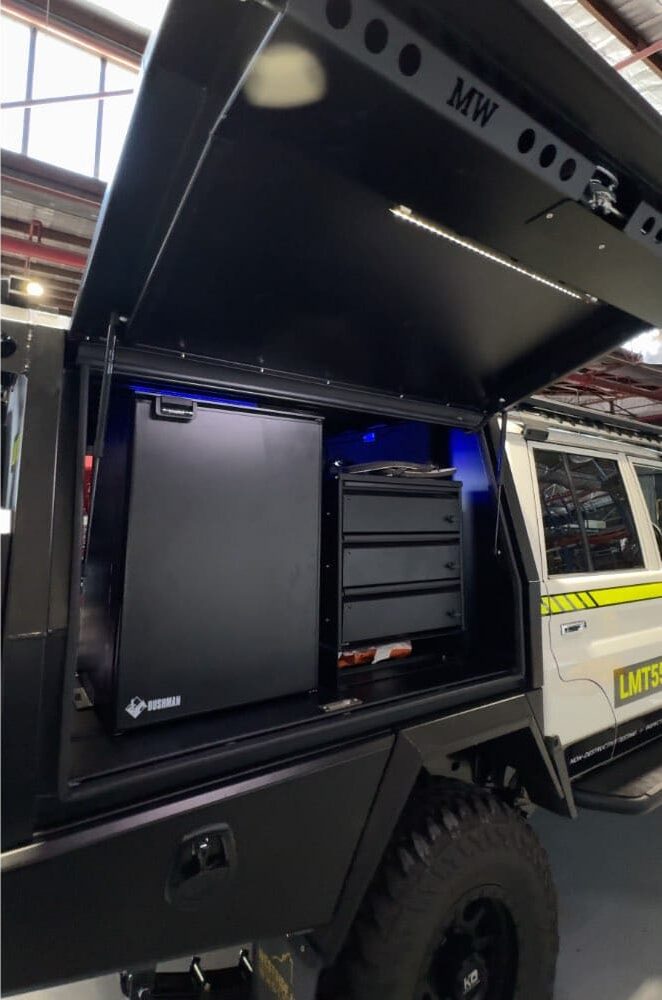
Should you add Starlink or UHF?
For metro work, normal mobile coverage may be all you need.
For remote technicians, mining contractors, civil crews, surveyors and workers travelling through regional WA, communications can become part of the electrical design itself.
A Starlink vehicle fitout can be planned alongside the main 12V system so the hardware, power supply and cable routing all have a sensible place in the canopy.
UHF equipment can be approached the same way. Plan power, antenna routing, mounting and access before storage and other accessories block the easiest installation paths.
If Starlink or other communications equipment will run for extended periods while parked, that electrical load also needs to be included when sizing the auxiliary system.
Plan the physical canopy layout before wiring it
Electrical design and canopy layout should happen together.
The battery, charging equipment, inverter, distribution equipment, switches and outlets all need somewhere sensible to live. At the same time, you still need room for the actual reason you bought the ute: your gear.
Consider:
- Drawers and shelving
- Toolboxes
- Fridge position
- Heavy equipment
- Frequently used tools
- Cable routes
- Access to fuses and electrical components
- Future accessories
- Protection from loose tools and cargo
- Overall vehicle payload
A system that looks tidy on day one but needs three drawers removed to reach a fuse is not particularly clever.
What 12V setup suits your work ute?
There is no universal best setup. A metro trade ute, a mobile workshop and a remote service vehicle can have very different electrical demands.
Example work ute setups
The right setup depends on what the vehicle does, how long it sits parked and which equipment needs to stay powered.
| Setup | Typical use | Common inclusions | Charging focus |
|---|---|---|---|
| Metro trade ute | Electricians, plumbers, carpenters and other trades moving between Perth jobs. | Auxiliary battery, inverter, battery monitor, tool charging, USB/12V power, canopy lighting and fridge circuit. | Frequent driving can provide regular charging opportunities. |
| Mobile service ute | Mechanics, HVAC technicians and field service workers using the ute as a mobile workshop. | Diagnostic power, air compressor, work lights, extra outlets, UHF and higher electrical capacity where required. | Depends heavily on equipment load and time spent parked. |
| Remote work ute | Surveyors, civil crews, mining contractors and technicians working away from metro areas. | Auxiliary power, solar, Starlink, UHF, fridge, work lighting and dedicated remote equipment circuits. | Stored energy and supplementary solar become more useful during long stationary periods. |
Metro trade ute
A straightforward metro setup is often focused on convenience.
You want to charge tools, keep equipment powered and light the canopy without thinking about the electrical system every five minutes.
Because the ute regularly travels between jobs, it may also have more opportunities to replenish the auxiliary battery while driving.
Mobile service ute
A mobile service ute can become a workshop on wheels.
That can increase demand for lighting, outlets, diagnostic equipment, an air compressor and other powered equipment.
Accessibility matters here. If you use something five times a day, its switch or outlet should not be tucked behind equipment you need to unload first.
Remote work ute
Remote work changes the priorities again.
When the vehicle spends hours away from mains power, the setup may need greater energy storage, solar charging, Starlink, UHF and additional work lighting.
The objective is not simply fitting a bigger battery. It is having enough usable power and a sensible way of putting that energy back.
How does the 12V canopy fit into the rest of the ute setup?
The electrical system is only one part of a useful work vehicle.
Storage, tool access, lighting, payload, security and the type of work you do all influence how well the finished ute works day to day. Our guide to the best tradie ute setup covers the broader vehicle setup, including how electrical equipment fits alongside storage, safety and work accessories.
That is worth thinking about before installing the 12V system. It is much easier to position batteries, outlets and switches when you already know where the drawers, fridge, tools and frequently used equipment are going.
Can you install a 12V system in an existing canopy?
Yes. In many cases, a 12V electrical system can be added to an existing canopy or toolbox.
The canopy still needs to be assessed first.
Available space, construction, storage layout and existing wiring can all affect where batteries, charging equipment, outlets and other components can be fitted.
It can also be a good opportunity to sort out previous electrical work.
If the last owner left you six mystery switches, three loose cables and an Anderson plug that disappears behind the drawers, working out what they actually do is normally a good idea before adding anything else.
Common 12V canopy setup mistakes
Buying components before working out the load
Start with the equipment, not the shopping list.
Your expected power use should help determine the battery, inverter and charging setup.
Forgetting about simultaneous use
It is not enough to know that each device can operate individually.
Think about what happens when the fridge, lighting and several chargers are all running together.
Putting everything wherever it fits
The easiest mounting position during installation is not always the easiest position to use, inspect or service later.
Leaving no room for future upgrades
Trade vehicles change.
You might add another charger, Starlink, additional lighting or an air compressor in six months. Planning for some expansion during the original fit-out can make that much easier.
Ignoring service access
Fuses, switches and monitoring equipment should not be buried behind the gear you use every day.
Using the starter battery as your work battery
Your tools and accessories should not leave you standing beside a ute that will not start.
A properly planned auxiliary system keeps work loads separate from the battery responsible for starting the vehicle.
Is a professionally installed 12V canopy setup worth it?
For a work vehicle, the value is not simply having more power.
It is having a system where the battery, charging equipment, inverter, circuit protection, outlets and accessories have been selected and installed to work together.
The battery needs to suit the load. The charging setup needs to suit the battery and vehicle. The inverter needs to suit the equipment. Wiring needs to be routed, secured and protected properly. Everything also needs to fit around the canopy, tools and normal working routine.
That becomes even more useful when the ute earns money every day.
A dodgy connection that kills the fridge on a camping trip is annoying.
A fault that stops your chargers, lighting or communications halfway through a working day costs you time.
Get your work ute canopy set up properly
A work ute should make the day easier, not send you hunting for power points.
Voltaic designs vehicle electrical systems around the ute, the equipment being carried and how it is actually used. Depending on the job, a setup can include dual batteries, inverters, battery monitoring, canopy lighting, solar, fridges, UHF, Starlink, air compressors and other electrical accessories.
Voltaic Auto Electrical & Air Conditioning is a Western Australian owned and operated business established in 2017. Owner Josh Doutch has more than 20 years of hands-on trade experience, including automotive electrical and heavy-duty mechanical work.
Planning a powered canopy?
Tell us what you drive, what equipment needs power and how the ute is used. We can help plan a practical electrical setup around your working day.
FAQs
What size battery do I need for a work ute canopy?
The required battery capacity depends on the equipment you want to run, how long it operates while the vehicle is parked, how often the ute is driven and whether another charging source such as solar is available. Work out the expected electrical load before choosing the battery.
Can a dual battery system charge cordless tool batteries?
Yes. A correctly designed auxiliary battery system with a suitable inverter can power compatible cordless tool battery chargers. The inverter and battery system need to suit the chargers being used and the number likely to operate at the same time.
Will a 12V canopy setup flatten my starter battery?
A properly designed dual battery system allows work accessories to draw from an auxiliary power source instead of relying on the vehicle’s starter battery while parked.
Do I need solar on my work ute?
Not necessarily. Solar can be useful when the ute spends long periods parked while the auxiliary battery continues powering equipment. A vehicle that is driven regularly throughout the day may have more opportunities to recharge while travelling.
Do I need an inverter in my ute canopy?
You need an inverter when the battery system needs to operate compatible 240V equipment. This commonly includes cordless tool chargers, laptops and other suitable equipment. If everything you use operates directly from 12V or USB power, your requirements may be different.
Can you fit a 12V system into an existing canopy?
Yes, often you can. The canopy’s available space, construction, storage layout and existing wiring should be inspected before deciding where batteries, electrical equipment, outlets and lighting will be positioned.