

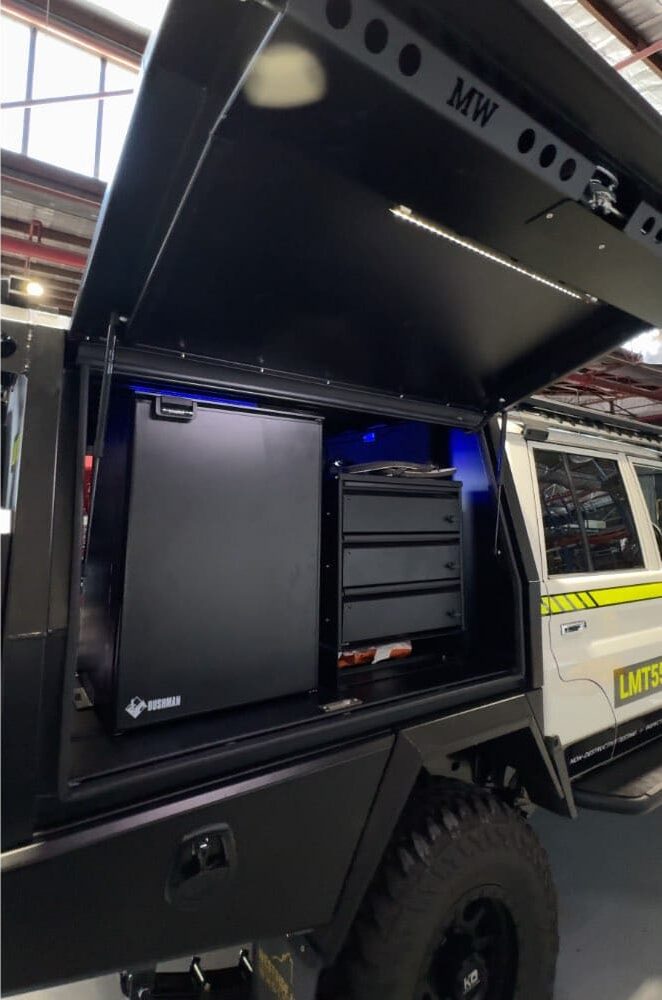
The best setup for a tradie ute is one built around the tools you carry, the equipment you need to power and the way you actually work each day. For most tradies, that means combining a properly designed 12V power system with practical storage, good lighting, secure load restraint and the right communications and safety gear.
There is no single ute setup that suits every trade. An electrician charging tool batteries around Perth needs something different from a mobile mechanic working remotely, so the smartest approach is to build the ute around the job instead of filling the canopy with every accessory in the catalogue.
Quick summary
- A dual battery system is the foundation of most powered tradie ute setups because it allows work accessories to run without relying on the starter battery.
- The inverter needs to suit the actual equipment you use, including the number and power requirements of your tool chargers and other 240V equipment.
- Good storage should reduce wasted movement by keeping frequently used tools easy to reach while securely containing equipment during travel.
- Canopy and toolbox lighting can make a big difference when working before sunrise, after dark or inside a packed canopy.
- Remote workers may benefit from UHF, Starlink, solar and additional battery capacity where access to power and communications is limited.
- Plan the entire fit-out before installing individual accessories so wiring, switches, storage and future upgrades all work together.
What is the best setup for a tradie ute?
The best tradie ute setup normally covers six areas: power, storage, lighting, safety, communications and everyday convenience. What goes into each area depends on your trade and where you work.
A metro carpenter might mainly need drawers, canopy lighting, a dual battery and an inverter for tool chargers. A field technician travelling through regional WA could need the same equipment plus solar, Starlink, UHF communications, a fridge and an air compressor.
That is why a good trade vehicle fit-out should start with what the vehicle actually needs to do.
A practical tradie ute setup at a glance
POWER
Dual battery, inverter, battery monitor and optional solar.
STORAGE
Drawers, toolboxes and dedicated spaces for frequently used equipment.
LIGHTING
Canopy, toolbox and external work lighting where required.
SAFETY
Secure loads, cameras and equipment positioned so it stays protected.
COMMS
UHF and Starlink for crews working beyond reliable mobile coverage.
CONVENIENCE
Fridge, pie warmer, air compressor, outlets and accessible switches.
Start by working out what your ute needs to power
Your electrical load should be worked out before choosing batteries or an inverter. Write down everything you expect to run or charge, how often you use it and whether several devices will be operating at the same time.
For a tradie, that could include:
- cordless tool battery chargers
- laptops and tablets
- test and diagnostic equipment
- fridges
- pie warmers
- canopy and toolbox lighting
- Starlink equipment
- UHF radios
- air compressors
- cameras
- USB and accessory outlets
Once you know what needs power, you can design the battery capacity, charging system, inverter and circuits around the expected load. Doing it backwards can leave you with an expensive system that still struggles when you plug everything in.
Dual battery system
For many tradies, a dual battery system is the starting point. The auxiliary battery supplies your work accessories while helping preserve the starter battery for its most important job: getting the ute started.
That means you can charge batteries, keep the fridge cold or run other suitable equipment while parked without treating the starter battery like a disposable power bank.
Inverter
An inverter allows suitable 240V equipment and chargers to operate from the ute’s battery system. Bigger is not automatically better.
The inverter should be selected around the equipment you intend to use, including its normal power consumption and any higher starting demand. If you regularly run several chargers together, that should be considered during the design rather than discovered on site Monday morning.
Battery monitoring
A battery monitor gives you a clearer picture of the auxiliary battery’s condition and remaining capacity. This is particularly useful when the ute spends long periods parked with fridges, chargers or communications equipment running.
Instead of guessing whether you have enough battery left for another afternoon, you can actually see what the system is doing.
Solar power
Solar can be worth considering when the vehicle regularly spends extended periods away from mains power. It can support the auxiliary electrical system during the day and reduce how heavily you rely on driving time to recharge it.
It is not necessary for every metro work ute, but it can make plenty of sense for surveyors, field technicians, civil crews and other tradies working remotely.
Ute canopy fit out ideas that actually save time
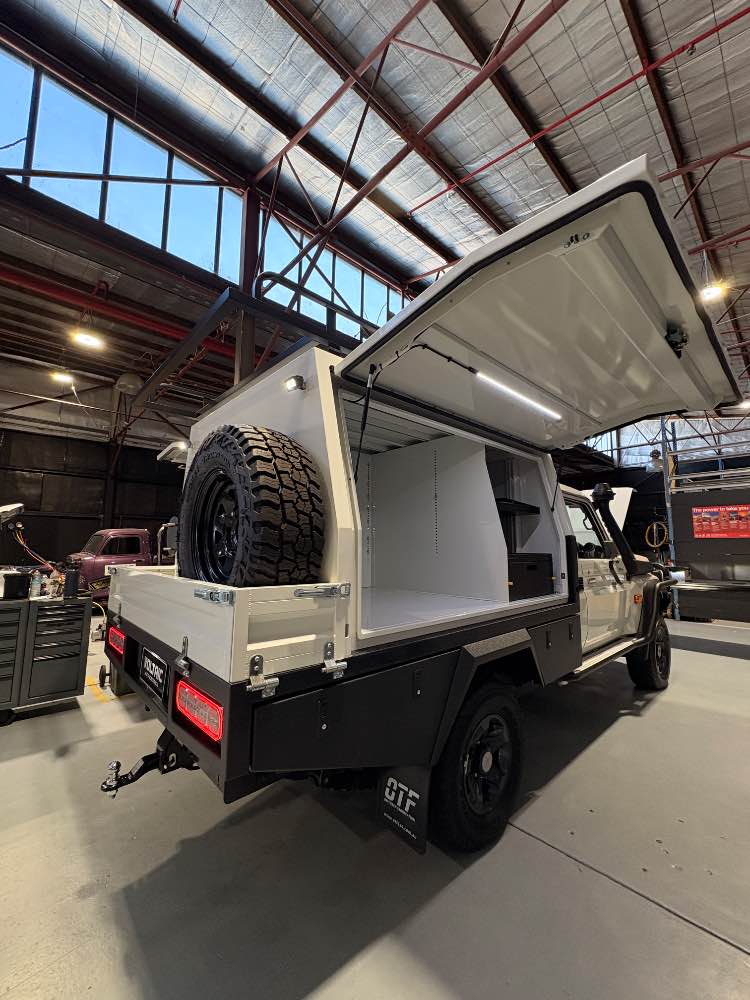
The best ute canopy fit out ideas are usually the boring ones that save you ten minutes every day. Easy-access drawers, properly positioned lighting and a sensible home for every tool will generally do more for your working day than an accessory you use twice a year.
Start by thinking about frequency of use.
- Daily tools: Keep these within easy reach without unloading half the canopy.
- Small parts: Use dedicated drawers or compartments so fittings, fixings and electrical components stay organised.
- Heavy equipment: Position it securely and consider how its weight affects the vehicle.
- Electrical components: Keep batteries, fuses and other equipment protected while retaining access for inspection and servicing.
- Dirty or wet gear: Separate it from electronics, test equipment and clean storage where practical.
- Occasional equipment: Give prime storage space to what you use every day, not what looks impressive when the canopy doors are open.
A good canopy should work almost like a small mobile workshop. You should know where something is without digging through three tool bags and questioning every decision you have made since starting your apprenticeship.
Do not overlook load restraint and vehicle weight
A great setup still needs to be safe on the road. Tools, batteries, drawers, canopies, compressors, fridges and accessories all add weight, while loose equipment can become dangerous if the vehicle brakes, corners or is involved in a collision.
In Western Australia, drivers are responsible for making sure loads carried in light vehicles are properly secured. Toolboxes, drawers, tie-down points and other restraint methods should be selected and used with that in mind.
Vehicle payload also matters. A ute that starts with a heavy tray and canopy has less payload remaining for drawers, batteries, tools, passengers and everything else you throw in for the working day.
Think about the completed vehicle rather than assessing each accessory on its own. Ten individually reasonable additions can still become one very heavy ute.
Good canopy and toolbox lighting is worth the money
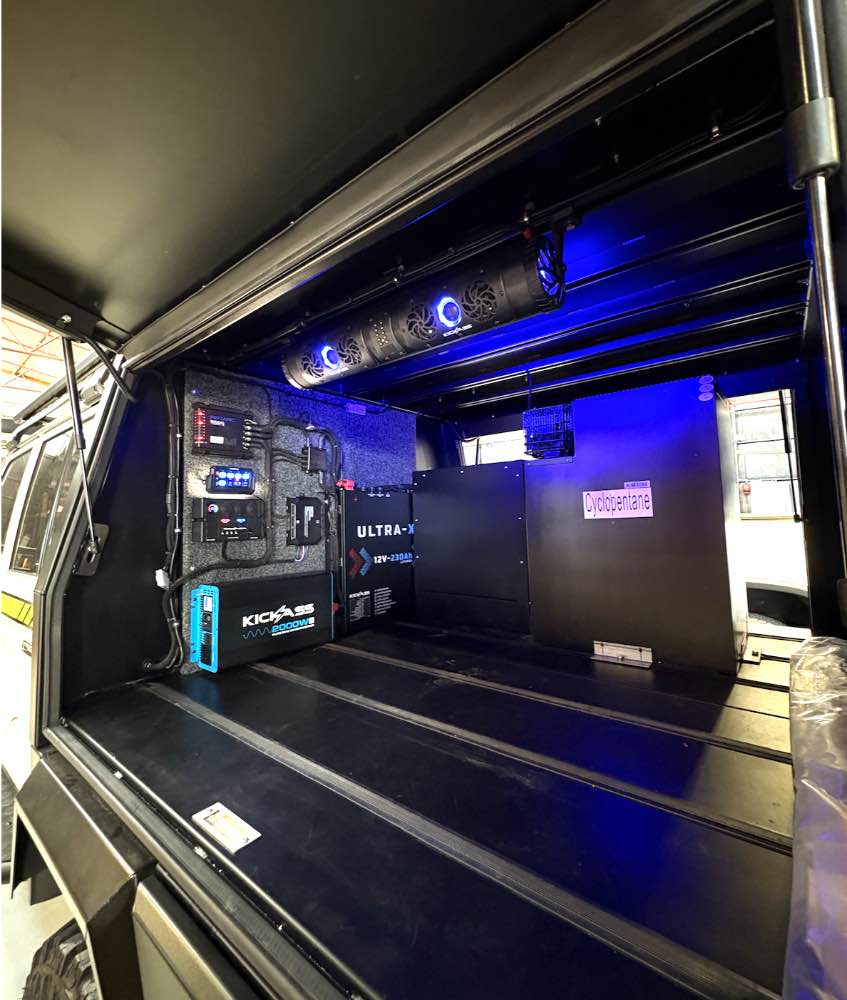
Canopy lighting is one of the simplest upgrades to appreciate every single day. Good lighting means less time using your phone torch to find a fitting buried in the back of a drawer at 5:30am.
Useful lighting options can include:
- LED canopy lighting
- toolbox lighting
- drawer lighting
- external work lights
- rear-facing work lights
- additional driving lights where suitable
The switching matters too. Put switches where they are easy to reach from the position you will actually be standing in. A technically perfect switch hidden behind a stack of toolboxes is not particularly helpful.
For additional road and off-road visibility, there are also dedicated vehicle LED lighting and spotlight options.
Consider UHF and Starlink for remote work
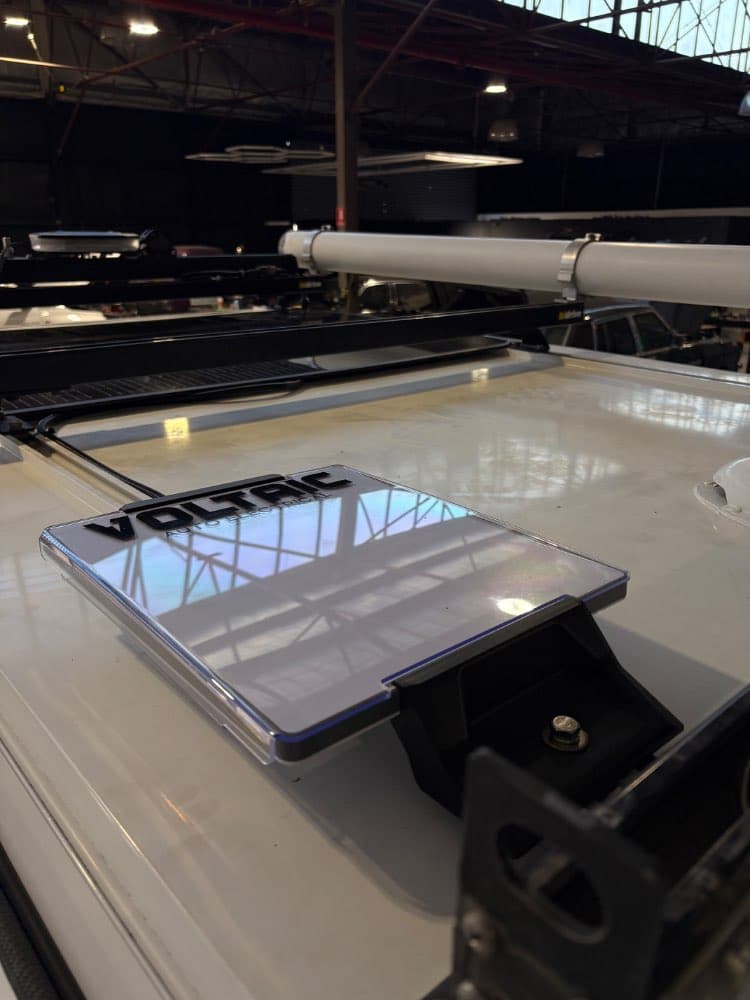
If your ute spends most of its life around Perth, your communications setup might be fairly simple. If you regularly head into regional WA, mine sites, farms or remote civil projects, communications can become a much bigger part of the fit-out.
UHF radio
A professionally installed UHF radio can support vehicle-to-vehicle and site communications where UHF is used by the crew or project.
The installation should also consider antenna positioning, cable routing and where the controls can be reached without making the cab a mess.
Starlink
A vehicle Starlink setup can be useful for tradies and technicians who need internet access while working beyond reliable mobile coverage.
For example, a remote service technician may need to access technical documents, communicate with the office, upload reports or use cloud-based systems from the vehicle.
The fit-out can account for the Starlink hardware, mounting, cable routing and 12V power supply alongside the rest of the ute’s electrical system.
Cameras can protect both the vehicle and the driver
Cameras are worth considering when your ute is used every day for work, particularly if it spends plenty of time in traffic, on busy sites or reversing around equipment and other vehicles.
Dash cameras
A hardwired dash cam installation keeps the wiring neatly concealed and can support additional functions such as parking mode where the selected camera allows it.
For work vehicles travelling between jobs every day, having footage available after an incident can be useful when working out what actually happened.
Reverse cameras
Canopies, toolboxes and loaded trays can reduce visibility behind a ute. A reverse camera can make positioning the vehicle easier, particularly around workshops, worksites, trailers and tight customer driveways.
Tradie ute setups for different types of work
Different trades place very different demands on a vehicle. These examples show why copying another tradie’s ute setup does not always give you the best result.
| Trade | Typical power needs | Useful fit-out ideas |
|---|---|---|
| Electrician | Tool chargers, test gear and laptop | Dual battery, inverter, component drawers, canopy lighting, Starlink for remote work |
| Plumber or gas fitter | Press tools, inspection equipment, pumps and chargers | Dual battery, inverter, drawers, toolbox lighting and towing accessories |
| Builder or site supervisor | Chargers, laptop and communications | Dual battery, inverter, Starlink, UHF, drawers and fridge |
| Mobile mechanic | Diagnostics, chargers, lighting and service equipment | Heavy-duty drawers, inverter, air compressor, work lights and UHF |
| Surveyor | GNSS equipment, drones, laptop and radios | Dual battery, inverter, solar, Starlink, UHF and secure instrument storage |
| Civil or remote service crew | Charging, lighting, communications and accessories over long shifts | Higher-capacity 12V system, UHF, Starlink, work lights, compressor and fridge |
What should you prioritise if you cannot do everything at once?
If the budget does not stretch to the dream setup straight away, build the ute in stages. Start with the equipment that keeps you working, then add convenience and specialist accessories later.
A sensible upgrade order
Know where equipment, batteries and accessories will live before wiring starts.
Size the battery, charging system and inverter around the equipment you actually use.
These are relatively simple additions that can improve the working day immediately.
Choose UHF, Starlink and cameras according to where and how the vehicle works.
Add the fridge, pie warmer, compressor and other gear that makes long days easier.
Planning for those later additions during the first stage can also make future upgrades cleaner. Leaving suitable space for another accessory is much easier than discovering your shiny new inverter is occupying the only sensible mounting position.
Common tradie ute setup mistakes
A ute can have excellent equipment and still be frustrating to use if the overall fit-out has not been thought through.
Choosing an inverter before calculating the load
Buying an inverter because the number on the box looks impressive is not load planning. Work out what you need to run first, then build around it.
Running everything from the starter battery
Your starter battery exists primarily to start the vehicle. Regularly using it as the main power source for work equipment can leave you with the least productive accessory of all: a ute that does not start.
Putting switches and outlets in awkward locations
Think about where you will be standing when you use the equipment. Switches, charging points and outlets should be positioned around the working routine.
Blocking access to electrical equipment
Batteries, fuses and other electrical components need suitable protection, but the installation should also allow reasonable access for inspection, fault finding and future work.
Adding too much weight
Heavy drawers, canopies, batteries and tools add up quickly. Keep the vehicle’s payload and finished configuration in mind during the design.
Copying someone else’s setup
That fit-out on Instagram might look mint, but it was not necessarily built for your vehicle, your tools or your work.
A carpenter, electrician, surveyor and heavy diesel mechanic can all drive the same model ute and need four completely different setups.
Tradie ute fit-out checklist
Before deciding what goes into your ute, make a simple list of what the vehicle needs to achieve.
Before you build your setup
What should every tradie ute have?
There is no mandatory accessory list that suits every trade, but most well-planned setups benefit from secure tool storage, good work lighting and a power system suitable for the equipment being used.
If you regularly charge cordless tools or run accessories while parked, a dual battery system, inverter and battery monitor are often a strong starting point.
Can a dual battery system charge tool batteries?
Yes. A correctly designed dual battery and inverter setup can charge compatible cordless tool batteries. The battery capacity and inverter need to be chosen around the number and type of chargers you expect to use.
If several chargers are likely to run together, include them all when planning the system.
What size inverter is best for a tradie ute?
There is no single inverter size that is best for every tradie. The right size depends on what you intend to operate, its normal power draw and whether equipment will be used at the same time.
Work out the actual electrical load first rather than choosing an inverter based only on its maximum wattage.
Is Starlink worth adding to a work ute?
Starlink can make sense for mobile workers who regularly operate in regional or remote locations and need internet access for work. A metro-based tradie with reliable mobile coverage may have little need for it.
The value depends on where the vehicle works and how dependent your job is on an internet connection.
Build your ute around the work you actually do
The best tradie ute is not necessarily the one with the most gear. It is the one that makes your working day easier.
Get the power system right. Put your tools where you can reach them. Light the areas you actually use. Secure the load properly. Then add communications, cameras and convenience gear according to the work.
Voltaic builds custom trade vehicle fit-outs in Perth for individual tradies, mobile technicians and commercial fleets. Our qualified auto electricians can plan the 12V system, inverter, battery monitoring, storage, lighting, Starlink, UHF, cameras and accessories around your vehicle and daily routine.
With more than 20 years of hands-on trade experience behind the team, including auto electrical and heavy-duty mechanical knowledge, we know a work ute needs to do more than look tidy in the workshop. It needs to work.
Tell us what you drive, what you carry and what you need to power. We can help turn it into a practical mobile workspace built for the job.