

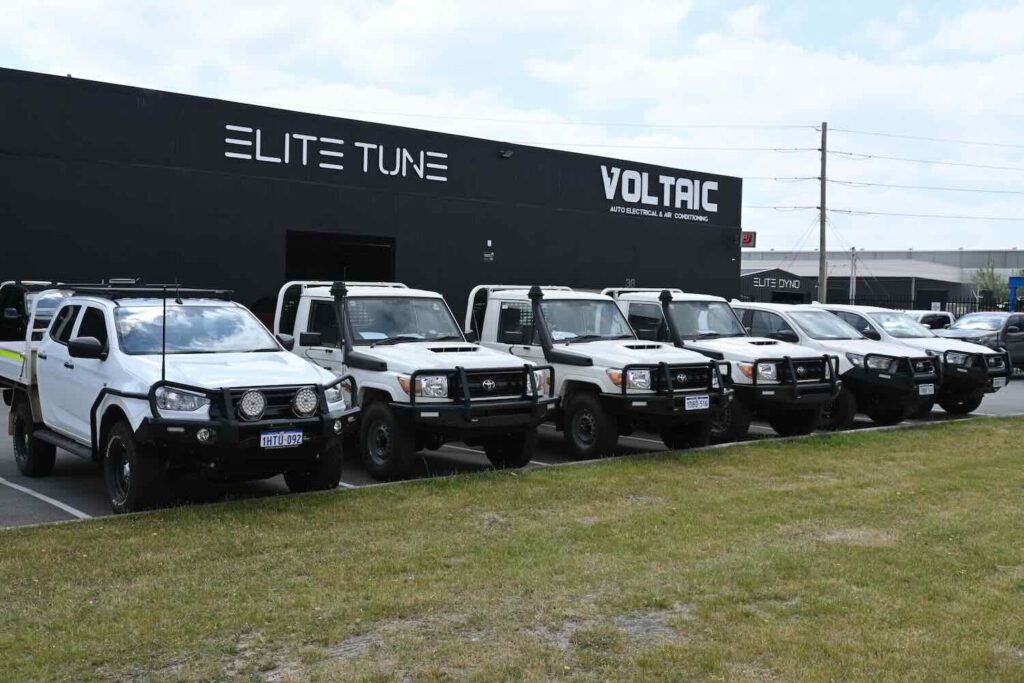
Fleet downtime is one of the most expensive problems a business can face. When a vehicle is off the road, you are not just losing transport. You are losing labour hours, productivity, job opportunities and often reputation.
From an auto electrical perspective, most downtime is preventable.
In my experience working across mining fleets, construction vehicles, traffic management utes, heavy-duty machinery and EVs, the majority of fleet downtime starts with electrical issues. Batteries, wiring faults, charging problems, poorly installed accessories, compliance failures, air conditioning faults and diagnostic neglect.
If you want to reduce fleet downtime properly, you need to build your strategy around electrical reliability first.
This guide breaks down exactly how to do that.
Quick Action Plan to Reduce Fleet Downtime
If you want to reduce fleet downtime immediately, start with this:
- Test every fleet battery this month
- Standardise accessory installations
- Conduct a full electrical compliance audit
- Schedule proactive diagnostic scans
- Replace ageing batteries before failure
- Implement load calculations on high-demand vehicles
- Introduce structured reporting from drivers
- Track electrical downtime trends
What Causes Fleet Downtime?
Before you can reduce fleet downtime, you need to understand what actually causes it.
In real-world fleet operations, downtime is usually triggered by:
- Flat or failed batteries
- Alternator or charging faults
- Wiring failures from poor installations
- Accessory overload
- Air conditioning failure in hot conditions
- Compliance defects on mine-spec vehicles
- Communication system failure
- Sensor or ECU faults
- Poor diagnostic practices
- Unplanned breakdowns
Mechanical faults matter. But modern fleets are electrically complex. The more technology you add, the higher the electrical load and risk.
The key is not reacting to failures. The key is preventing them.
13 Strategies for Minimising Fleet Downtime
1. Build a Preventative Electrical Maintenance Program
Most fleet downtime happens because electrical systems are only checked when something stops working.
That is too late.
A proper preventative electrical maintenance program should include:
- Scheduled battery load testing
- Alternator output checks
- Earth strap inspections
- Wiring loom inspections
- Fuse and relay testing
- Thermal imaging for hot spots
- Diagnostic scans for stored fault codes
- Accessory load calculations
Batteries are one of the biggest causes of fleet downtime. They fail quietly. Vehicles may start fine one day and not the next.
By testing batteries at every service interval instead of waiting for failure, you can replace them before they cause downtime.
Think of it like tyres. You do not wait for a blowout before replacing them. Electrical systems should be treated the same way.
Learn more about this in our blog on how to manage a fleet of vehicles.
2. Standardise Fleet Fit-Outs
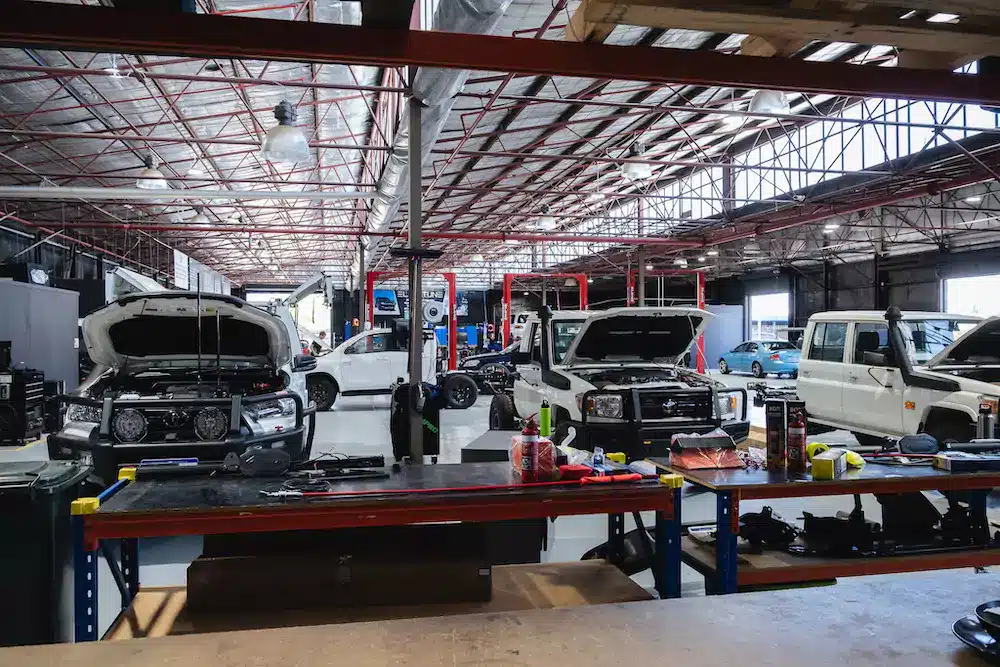
Inconsistent fit-outs create inconsistent reliability.
One vehicle has a quality dual battery system. Another has a budget setup. One has properly fused accessories. Another has wires twisted together behind the dash.
That inconsistency creates unpredictable downtime.
To minimise fleet downtime, you must standardise:
- Battery types and specifications
- Dual battery systems
- Brake controllers
- Dash cameras
- Reverse cameras
- UHF radios
- Lighting packages
- Isolation switches
- Compliance components
When every vehicle follows the same blueprint:
- Fault finding becomes faster
- Spare parts become standardised
- Install quality improves
- Repairs are quicker
Standardisation alone can dramatically reduce downtime across a fleet.
3. Monitor Electrical Load and Accessory Demand
Modern fleets run heavy electrical loads.
Common accessories include:
- LED light bars
- Work lights
- Inverters
- Fridges
- Dash cams
- GPS tracking
- Starlink systems
- Charging docks
- Emergency lighting
- Communication radios
Each of these draws power.
When installed incorrectly or without load calculation, they overload charging systems. That leads to:
- Flat batteries
- Alternator stress
- Premature component failure
- Intermittent faults
A proper electrical load assessment ensures the alternator and battery setup can handle the total demand.
Without this, downtime is only a matter of time.
4. Use Diagnostics Proactively, Not Reactively
Modern vehicles store valuable data.
Fault codes often appear before a vehicle breaks down completely. If you only scan vehicles when the dash lights up, you are missing early warning signs.
Proactive diagnostic scanning allows you to:
- Detect voltage irregularities
- Identify failing sensors
- Monitor battery management systems
- Detect parasitic drains
- Track recurring fault patterns
For fleet managers, one failure might be bad luck. Two identical failures is a pattern. Three is a system issue.
Diagnostics reduce downtime because they allow intervention before breakdown.
5. Replace Batteries Before They Fail
Battery failure is one of the top causes of fleet downtime.
A failed battery results in:
- Missed jobs
- Tow trucks
- Staff delays
- Frustrated operators
Fleet batteries work harder than private vehicles. They support accessories, idling time, and frequent short trips.
Set a replacement cycle based on:
- Age
- Load demand
- Testing results
- Operating environment
In high-demand fleets, replacing batteries every few years as part of a program is cheaper than breakdown recovery.
Preventative battery replacement saves money.
6. Improve Installation Quality
Poor installations are a silent fleet killer.
Common issues we see:
- Untidy wiring
- No fuse protection
- Incorrect cable gauge
- Loose earths
- Inadequate mounting
- Heat exposure
- Water ingress
Over time, these cause:
- Electrical shorts
- Blown fuses
- ECU faults
- Intermittent failures
- Fire risks
Professional installation with proper fuse protection, sealed connections and correct routing dramatically reduces downtime.
Fleet downtime often traces back to a rushed installation months earlier.
7. Maintain Air Conditioning Systems
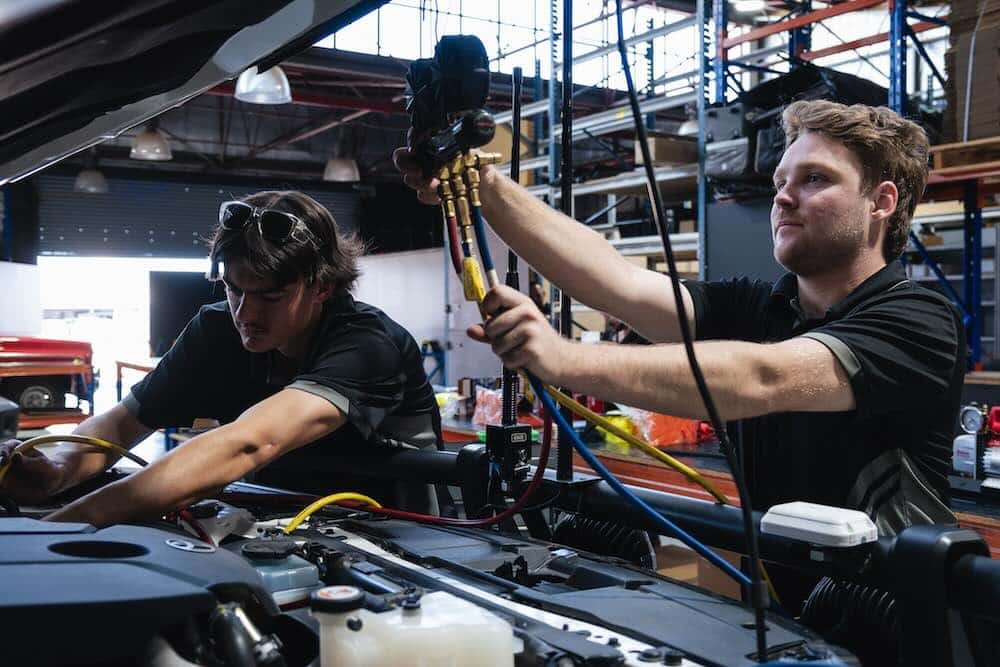
Air conditioning might seem like comfort, but in Australia it is operational.
When air conditioning fails:
- Drivers fatigue faster
- Productivity drops
- EV battery cooling can be affected
- Vehicles may be taken off the road
Fleet air conditioning systems need:
- Regular inspection
- Leak testing
- Refrigerant checks
- Compressor checks
- Cabin filter replacement
Ignoring AC until it stops working increases downtime during peak seasons.
In fleet operations, AC maintenance should be scheduled, not reactive.
8. Ensure Compliance Checks Are Up to Date
In mining and heavy industry, non-compliance equals downtime.
Vehicles can be rejected on site for:
- Incorrect lighting
- Missing isolation switches
- Damaged wiring
- Non-compliant accessories
- Faulty emergency systems
A compliance failure can sideline a vehicle immediately.
To minimise fleet downtime in these environments:
- Conduct scheduled compliance audits
- Inspect isolation systems
- Check lighting standards
- Review mounting and cable protection
- Update equipment to meet new site requirements
Compliance checks prevent costly last-minute removals from site.
9. Implement Field Servicing for Faster Response
Fleet downtime increases when vehicles must travel long distances to workshops.
Field servicing reduces this.
On-site services allow:
- Batch inspections
- Emergency repairs
- Compliance checks
- Accessory upgrades
- Diagnostic scanning
For large fleets, scheduling regular on-site electrical inspections significantly reduces downtime.
Vehicles stay operational while maintenance happens efficiently.
10. Train Drivers to Spot Early Warning Signs
Operators are the first line of defence against fleet downtime.
Train drivers to report:
- Slow starting
- Flickering lights
- Electrical burning smells
- Warning lights
- AC performance drops
- Communication issues
- Accessory faults
Early reporting allows minor issues to be fixed before they escalate.
Downtime is often caused by ignoring small signs.
11. Track Downtime Metrics
You cannot reduce fleet downtime if you do not measure it.
Track:
- Breakdown frequency
- Electrical repair frequency
- Battery replacement intervals
- Diagnostic fault trends
- AC failures
- Accessory failures
- Compliance issues
Look for patterns.
If alternators are failing every 18 months, investigate load demand. If batteries are dying early, review charging systems.
Data drives improvement.
12. Plan for EV and Hybrid Fleets Properly
EV and hybrid vehicles require different maintenance strategies.
Fleet downtime in EV fleets is often caused by:
- Cooling system neglect
- Software faults
- High-voltage warning issues
- Charging infrastructure problems
Thermal management is critical in EV fleets. Battery cooling and air conditioning integration must be maintained correctly.
Treating EVs like petrol vehicles increases downtime risk.
EV fleets need trained technicians and proper electrical expertise.
13. Work With an Experienced Fleet Auto Electrician
Minimising fleet downtime requires expertise.
You need a specialist who understands:
- Heavy-duty vehicles
- Mine-spec requirements
- Dual trade mechanical and electrical systems
- EV and hybrid systems
- Advanced diagnostics
- Compliance standards
- Large-scale fleet management
Fleet downtime is rarely about one single failure. It is about systems.
Most fleet downtime does not happen suddenly. It builds quietly through neglect, poor installation, lack of diagnostics and inconsistent standards.
As an auto electrician who works daily with fleet vehicles across mining, construction and commercial operations, I can tell you this:
The fleets with the lowest downtime are not lucky.
They are proactive.
If you manage your electrical systems properly, standardise your fleet, invest in preventative maintenance and track performance, you can dramatically reduce fleet downtime and protect your bottom line.
Get in touch with our fleet service team today to see how we can keep your fleet up and running.