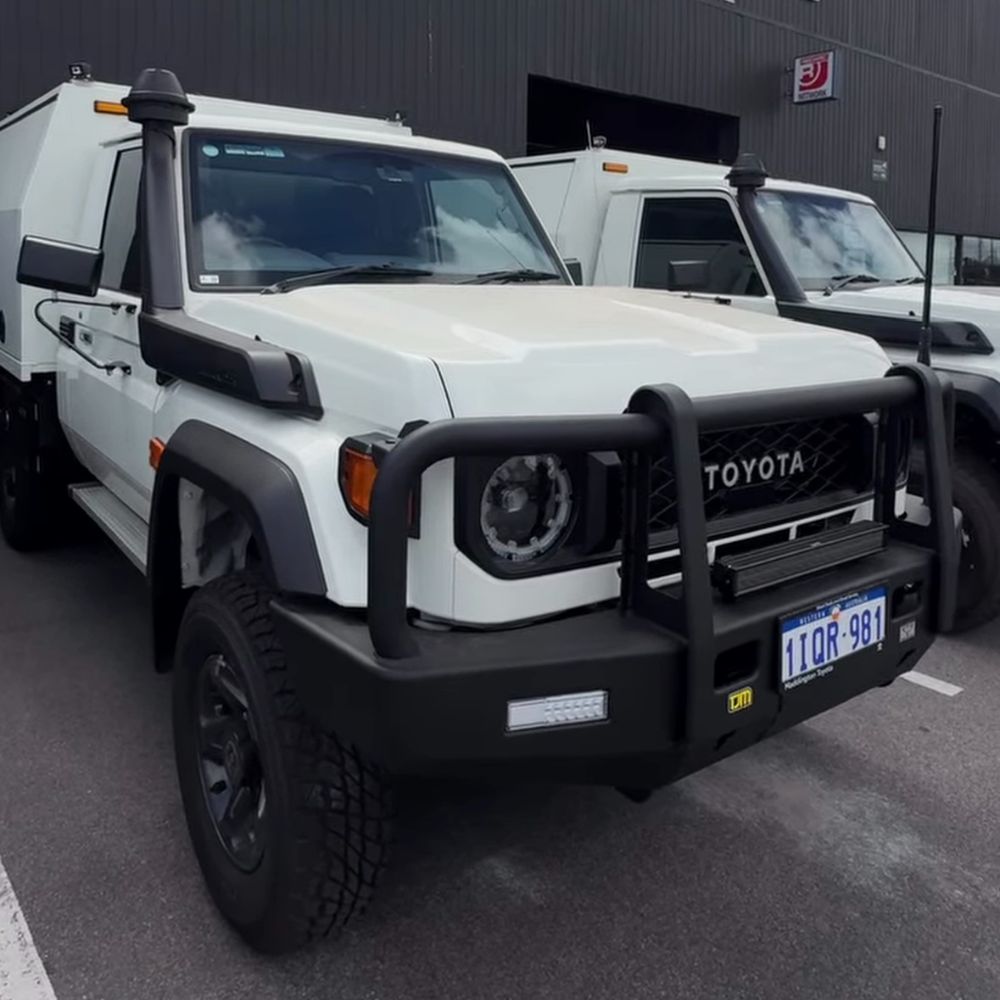
A commercial vehicle fit-out should make your ute, van, truck, 4WD or service vehicle safer, more organised and easier to manage. In Australia, a work vehicle is more than transport. It can be treated as a workplace, which means the fit-out needs to consider WHS duties, vehicle standards, site access, weight limits, load restraint, electrical reliability and daily productivity.
This commercial vehicle fit-out guide explains the key legal requirements, who regulates what, what equipment is commonly required, and how to plan a fit-out that keeps vehicles safe, compliant and ready for real work.
Quick Summary
- A commercial vehicle fit-out should be planned around the vehicle’s job, site requirements, payload, electrical load and worker safety.
- Vehicles used for work can be treated as workplaces, so WHS risk management should be part of the fit-out plan.
- GVM, GCM, axle load and payload should be checked before trays, canopies, batteries, drawers, toolboxes, roof racks or mine-spec equipment are added.
- ADRs, VSB 14, VSB 6, state transport rules, CoR duties and site-specific rules can all affect what can be fitted legally and safely.
- Mine-spec and tier-1 site vehicles often need visibility, warning, communication, isolation, safety and monitoring equipment before they are accepted onsite.
- A good fit-out reduces downtime, improves worker safety, protects assets and makes the vehicle easier to use every day.
What Is A Commercial Vehicle Fit-Out?
A commercial vehicle fit-out is the process of modifying a vehicle so it can safely and efficiently perform a work role. It can be as simple as adding secure racking to a van or as detailed as preparing a Toyota LandCruiser, Hilux, Ranger, service truck or crew vehicle for mining, civil, construction or remote field work.
A fit-out can include storage systems, drawers, canopies, trays, roof racks, ladder racks, cargo barriers, power systems, lighting, communication gear, safety equipment, monitoring systems, cameras, isolators and site-specific accessories.
The goal is simple. The vehicle should be safer, easier to work from, compliant for its use and reliable enough for the conditions it operates in.
Why Commercial Vehicle Fit-Outs Need Proper Planning
Commercial vehicle fit-outs can affect safety, insurance, warranty, registration, payload, driver visibility, braking performance, load restraint and site access. A rushed build may look fine in the workshop, then cause problems once tools, parts, workers, fuel, spare wheels, water, batteries and daily equipment are loaded.
Poor planning can lead to overloaded vehicles, bad weight distribution, damaged wiring, blocked safety sensors, loose cargo, manual handling risks and inconsistent fleet layouts.
For a fleet or site-based operation, those problems can become downtime, rework, compliance delays and avoidable risk. For a tradie, it can mean flat batteries, stolen tools, lost time and a vehicle that is harder to work from than it should be.
Who Regulates Commercial Vehicle Fit-Out Requirements?
There is no single rulebook for every commercial vehicle fit-out in Australia. Requirements come from different sources depending on the vehicle, the work, the site, the state or territory, and whether the vehicle is light, heavy, road-going, site-only or mine-ready.
| Area | Who Is Involved | What It Affects |
|---|---|---|
| Workplace Safety | WorkSafe regulators and WHS laws | Worker safety, risk controls, manual handling, emergency equipment, loading and safe vehicle use. |
| Mine Safety | State mine safety regulators and mine operators | Site access, mine-spec equipment, visibility, communication, warning systems and emergency controls. |
| Road Vehicle Standards | Commonwealth vehicle standards and state registration authorities | ADRs, lighting, braking, airbags, emissions, towing, seating, structure and registration compliance. |
| Light Vehicle Modifications | VSB 14 guidance and local transport authorities | Many modifications to light vehicles up to 4.5 tonnes GVM, including trays, canopies and structural changes. |
| Heavy Vehicle Modifications | NHVR, Approved Vehicle Examiners and VSB 6 | Modifications to vehicles over 4.5 tonnes GVM, including body mounting, tow couplings, brakes and structure. |
| Chain Of Responsibility | NHVR and parties involved in heavy vehicle transport tasks | Heavy vehicle safety, loading, maintenance, scheduling, fatigue, speed and transport duty management. |
| Site Rules And Contracts | Mine operators, principal contractors and asset owners | Site-specific fit-out inclusions, inspections, vehicle acceptance and documentation requirements. |
Commercial Vehicle Compliance Map
A commercial vehicle fit-out needs to satisfy three layers before it is ready for work: workplace safety, vehicle standards and site access rules.
|
01 WHS And Worker SafetyTreat the vehicle as part of the workplace. The layout should reduce avoidable risk for workers, drivers, passengers and nearby site users.
|
02 Vehicle StandardsThe fit-out should not compromise roadworthiness, registration, vehicle safety systems, towing capacity, structure or lighting compliance.
|
03 Site And Contract RulesMine, civil, construction, traffic and client sites may require extra equipment before a vehicle is approved for work.
|
Practical takeaway: check the legal baseline, vehicle modification rules and site access requirements before approving the fit-out.

Key Legal Requirements To Consider Before A Fit-Out
The exact legal requirements depend on the vehicle, state, site, industry and type of modification. Most commercial vehicle fit-outs should still be checked against the following areas before parts are ordered.
WHS Duties For Vehicles Used For Work
When a vehicle is used for work, risks connected to the vehicle need to be managed. This can include how it is selected, fitted out, loaded, driven, maintained and inspected.
A fit-out can support WHS risk control by improving storage, reducing awkward lifting, securing equipment, improving visibility, helping with reversing and keeping emergency gear accessible.
Australian Design Rules
The Australian Design Rules set national standards for road vehicle safety, anti-theft and emissions. A fit-out should not interfere with lighting, airbags, seat belts, braking, emissions systems, vehicle structure, safety sensors, cameras or driver-assistance systems.
VSB 14 For Light Vehicle Modifications
VSB 14 provides technical guidance for many light vehicle modifications. It can become relevant when a fit-out involves trays, canopies, suspension changes, seating changes, body mounting, chassis-related work, GVM upgrades, towing changes or other modifications beyond basic accessory fitting.
VSB 6 For Heavy Vehicle Modifications
VSB 6 is used for many heavy vehicle modifications. If the vehicle is above 4.5 tonnes GVM, modifications to body mounting, tow couplings, brakes, structure or load-carrying systems may need closer review and approval.
Chain Of Responsibility
Chain of Responsibility applies under heavy vehicle law and can make parties other than drivers responsible for heavy vehicle safety. For fit-outs, this matters when loading, maintenance, scheduling, fatigue, transport tasks and vehicle condition are influenced by the business.
Mine And Tier-1 Site Requirements
Mine and tier-1 site rules often go beyond road compliance. Vehicles may need specific equipment such as mine bars, beacons, whip flags, reverse alarms, UHF or VHF radios, IVMS, handbrake alarms, key-on lights, wheel chocks, safety triangles, first aid kits, fire extinguishers, hi-vis tape, wheel nut indicators, battery isolators and starter isolators.
Start With The Vehicle’s Job
A strong fit-out starts with the work the vehicle needs to perform. The same ute, van or truck can need a completely different setup depending on whether it is used for metro civil work, mine-site support, traffic management, regional field servicing, heavy-duty maintenance or trade work.
Before choosing equipment, confirm:
- Who will use the vehicle and how often.
- Which sites the vehicle needs to access.
- What tools, parts and equipment the vehicle carries.
- Which equipment needs 12V or 240V power.
- Whether the vehicle needs remote communication.
- Whether the vehicle tows trailers, compressors, generators or plant.
- Whether it operates in dust, vibration, heat, mud, water or corrugated conditions.
- Whether the build needs to be repeated across multiple vehicles.
Weight, GVM, GCM And Payload
Weight is one of the easiest parts of a fit-out to underestimate. It is also one of the most expensive to fix after the build is finished.
GVM means Gross Vehicle Mass. It is the maximum loaded weight of the vehicle. GCM means Gross Combination Mass. It is the maximum combined weight of the loaded vehicle and trailer, where towing applies.
A commercial vehicle can become overweight once the final load includes:
- Workers and personal gear.
- Fuel, water and spare wheels.
- Tools, parts and stock.
- Trays, canopies, drawers and racking.
- Bullbars, roof racks, ladder racks and tow equipment.
- Dual batteries, inverters, fridges and compressors.
- Tow ball download where towing applies.
The safest approach is to plan the fit-out around a fully loaded working day, not an empty vehicle in the workshop.
Commercial Fit-Out Planning Flow
A commercial vehicle fit-out should be planned in the right order. Start with the job, check the rules, confirm the weight, then build a setup that works safely every day.
|
01 Define The JobConfirm the work type, site use, tools carried, crew needs, towing requirements and daily access points. |
02 Check The RulesReview WHS duties, ADR impacts, VSB 14, VSB 6, site access rules and client fit-out requirements. |
03 Confirm WeightCheck GVM, GCM, axle limits, accessory weight, tools, crew, fuel, water and tow ball download. |
04 Build And RecordFit the storage, power, lighting, comms and safety gear, then document the setup for handover. |
Practical takeaway: plan the fit-out before the build starts. It helps avoid rework, downtime and compliance headaches later.
Storage, Load Restraint And Manual Handling
Storage should do more than make a vehicle look tidy. It should reduce lost time, control the load and make safer work easier.
A practical commercial fit-out should:
- Store heavy items low where practical.
- Keep frequently used tools easy to reach.
- Use drawers, racking, shelving or bins to separate equipment.
- Secure loose items so they cannot move during braking or impact.
- Use cargo barriers where the load area is connected to the cabin.
- Use lockable storage for high-value tools.
- Leave clear access to first aid kits, fire extinguishers and wheel chocks.
- Reduce unnecessary lifting, twisting, reaching and climbing.
Electrical And Power Requirements
Power systems are a major part of many commercial vehicle fit-outs. The system needs to support the equipment without draining the starter battery or creating electrical faults.
Common electrical fit-out components include dual battery systems, lithium batteries, DC-DC chargers, inverters, Anderson plugs, solar input, 12V outlets, 240V power where suitable, control boxes, fuse systems, battery monitors, Starlink power, work light circuits and tool charging systems.
Dual Battery Systems
A dual battery system lets accessories run from a secondary battery instead of the main starting battery. This is useful for fridges, radios, lights, Starlink, chargers, tools, compressors, laptops and site equipment.
Lithium Battery Systems
LiFePO4 lithium batteries can suit commercial vehicles that need better usable capacity and lower weight. They should be installed with the correct charger, cable size, fusing, battery management and mounting.
Inverters And 240V Power
An inverter can provide 240V power for selected equipment. The inverter size should match the load, expected run time, battery capacity and safety requirements. This is not the place for mystery wiring.
Wiring Protection
Commercial vehicles deal with vibration, dust, heat, water, rough roads and long shifts. Wiring should be fused correctly, routed neatly, protected from abrasion and kept away from heat and moving parts.
Lighting, Visibility And Warning Systems
Visibility is one of the core reasons for a site-ready fit-out. Workers need to see, and other workers need to see the vehicle.
Common lighting and warning equipment includes:
- Low-profile beacons.
- Mine bars.
- Work lights.
- Spotlights and light bars.
- Reverse lights and raised tail lights.
- Canopy front-facing indicators.
- Key-on lights.
- Reverse alarms.
- Wig wag lighting.
- Hi-vis tape.
- Whip flags.
- Wheel nut indicators.
Communication, Monitoring And Connectivity
Commercial vehicles often operate across large sites, remote locations or high-risk work areas. Communication and monitoring systems help workers stay connected and help businesses manage risk.
UHF And VHF Radios
UHF and VHF radios support short-distance site and vehicle communication. The right setup depends on the site, operating environment and channel requirements.
IVMS And GPS Tracking
IVMS stands for In Vehicle Monitoring System. It can support fleet visibility, journey management, speed monitoring, incident review and driver behaviour reporting. Some sites require IVMS before vehicles can enter.
Dash Cameras And Reverse Cameras
Cameras can support incident review, reversing safety and driver visibility. They are useful for fleets, site vehicles, trade vehicles, delivery vehicles and heavy-duty applications.
Starlink For Remote Vehicles
Starlink can support connectivity in remote areas where mobile reception is limited. Vehicle installations should consider power draw, mounting, cable routing, theft risk, weather exposure and how the crew will use the system.
Mine-Spec And Site-Ready Requirements
Mine-spec is not one fixed national checklist. It is a practical term for vehicles prepared to meet mine or site rules. Those rules can change depending on the mine operator, contractor, state, vehicle class, work activity and risk assessment.
A mine-spec or tier-1 site-ready vehicle may need:
- UHF or VHF radio.
- Mine bar.
- Beacon.
- Work lights.
- Whip flag.
- Reverse alarm.
- Battery isolator.
- Starter isolator.
- Handbrake alarm.
- Key-on lights.
- Fire extinguisher.
- First aid kit.
- Wheel chocks.
- Safety triangles.
- Wheel nut indicators.
- Hi-vis tape.
- Asset stickers.
- Vehicle signage.
- IVMS.
- GPS tracking.
- Reverse camera.
- Tyre pressure monitoring.
- Bullbar.
- Towbar.
- Trailer plug.
- Electric brakes.
- Anderson plugs.
- Canvas seat covers.
- ROPS-certified tray where required.
Mine-Spec Fit-Out Essentials
Most site-ready mine vehicles need a mix of safety, visibility, communication and power systems. Exact requirements should always be checked against the current site standard.
|
01 Safety And IsolationSite vehicles often need controls that help manage electrical risk, movement risk and emergency response.
|
02 Visibility And WarningVehicle visibility matters around workers, mobile plant, supervisors and other site traffic.
|
03 Power And CommunicationReliable power and communication help the vehicle stay useful across long shifts, remote sites and high-demand work.
|
Practical takeaway: mine-spec is not one universal checklist. Always match the build to the current operator, site and vehicle requirements.
Case Study: Toyota LandCruiser 79 Series Fleet Fit-Out
This mining fleet project involved three Toyota LandCruiser 79 Series vehicles prepared for tough site use. The build was designed to improve safety, visibility, communication and onboard power for day-to-day mining operations.
Fleet Fit-Out Snapshot
- Industry: Mining
- Vehicle: Toyota LandCruiser 79 Series
- Fleet Size: 3 vehicles
- Original Case Study Standard: Mines Safety and Inspection Regulations 1995 compliant
Fit-Out Inclusions
- 100Ah lithium battery.
- REDARC 25A BCDC charger.
- Mine bar with beacon.
- Reverse alarm.
- Work lights.
- Raised tail lights.
- Uniden UHF radio.
- KickAss 12V control box.
- V strip lights throughout the canopy.
- Handbrake alarm.
- Key-on lights on function.
- Quee light bar.
- Canopy front-facing indicators.
- Canopy front-facing work lights.
The build shows how a practical site vehicle fit-out comes together. The lithium battery and DC-DC charger support onboard power. The mine bar, beacon, work lights, raised tail lights and canopy lights improve visibility. The UHF supports site communication. The handbrake alarm and key-on lights help meet common site safety expectations.
Learn more about this fit-out.
Commercial Fit-Out Requirements By Vehicle Type
Utes And Dual-Cabs
Utes and dual-cabs are common across trades, utilities, civil work, mining and field service. Key risks include rear axle load, canopy weight, tray setup, towing, tool security, lighting and site acceptance.
Vans
Vans are common for electricians, plumbers, HVAC technicians, locksmiths and mobile service crews. Key risks include cargo movement, internal access, racking strength, tool theft and separation between the load area and cabin.
4WDs And Wagons
4WDs and wagons are common for supervisors, remote travel, field teams and mine sites. Key risks include payload, communications, lighting, recovery equipment, dual batteries and accessory weight.
Light Trucks
Light trucks are common for service bodies, delivery work, traffic management and mobile equipment. Key risks include body mounting, load restraint, heavy vehicle requirements, cameras and maintenance access.
Buses And Crew Vehicles
Buses and crew vehicles need careful planning around passenger safety, seat belts, emergency equipment, reversing visibility, communication, access steps and driver visibility.
Mobile Plant And Equipment
Mobile plant and equipment need fit-outs and electrical work that can handle dust, heat, vibration, water, oil and long operating hours. This may include lighting, cameras, communication systems, diagnostics, isolation systems and protected wiring.
Fleet Standardisation And Procurement Control
A single vehicle can be built around one user. A fleet needs consistency. Standardised fit-outs make vehicles easier to manage, maintain, inspect and hand over between workers.
Fleet standardisation can help with:
- Consistent safety controls across vehicles.
- Easier driver and worker induction.
- Cleaner procurement and parts management.
- Faster servicing and fault diagnosis.
- Better warranty tracking.
- Reduced downtime when workers swap vehicles.
- Repeatable site inspection outcomes.
- Clearer asset records.
Tool Security And Asset Protection
Tool theft can stop a job, delay a crew and cost far more than the missing gear. A commercial fit-out should make tools harder to access, easier to track and better protected in normal work conditions.
Useful security options include:
- Lockable toolboxes.
- Internal lockboxes.
- High-security canopy locks.
- Alarmed canopies or tool storage.
- Dash cameras.
- GPS tracking.
- Asset stickers.
- Secure racking and drawers.
- Tool inventory systems.
EV And Hybrid Fleet Fit-Out Considerations
EV and hybrid work vehicles need extra care during fit-out planning. Weight, range, accessory power, warranty, charging access and system compatibility need to be considered early.
Key considerations include:
- Accessory weight and its effect on range.
- Roof rack drag and its effect on efficiency.
- Safe cable routing around vehicle systems.
- High-voltage safety boundaries.
- Manufacturer warranty conditions.
- Sensor, camera and radar compatibility.
- Charging access and operational range.
Commercial Vehicle Fit-Out Checklist
Vehicle And Work Use
- Confirm vehicle make, model, body type and year.
- Confirm the work role and site environment.
- Confirm crew size and typical load.
- Confirm towing requirements.
- Confirm remote power and communication needs.
Legal And Compliance Checks
- Check WHS risk controls for vehicle use.
- Check ADR impacts before adding major accessories.
- Check whether VSB 14 applies to light vehicle modifications.
- Check whether VSB 6 applies to heavy vehicle modifications.
- Check CoR risks for heavy vehicle tasks.
- Check site rules before ordering equipment.
Weight And Load Checks
- Check GVM and GCM.
- Check axle limits.
- Estimate final accessory weight.
- Estimate loaded operating weight.
- Confirm whether engineering sign-off is needed.
Final Handover Checks
- Test all electrical systems.
- Test communication systems.
- Test cameras, lights and alarms.
- Check battery charging behaviour.
- Confirm safety gear locations.
- Train users on key systems.
Common Fit-Out Mistakes To Avoid
Building Before Checking Site Requirements
Site rules should be checked before the build. Otherwise, the vehicle may need rework before it can enter the site.
Ignoring Weight Until The End
Weight should be part of the first conversation, not the final surprise. Trays, canopies, batteries, drawers and tools add up quickly.
Using Poor Wiring Practices
Commercial vehicles shake, flex and work hard. Poor cable routing and weak protection can cause faults, downtime and difficult diagnostics.
Blocking Safety Systems
Accessories should not block airbags, cameras, radar, sensors, lights or visibility. Modern vehicles do not enjoy random accessories being placed in front of their safety systems.
Skipping Documentation
Without documentation, future repairs and fleet management become harder than they need to be.
FAQs
What Should Be Included In A Commercial Vehicle Fit-Out?
A commercial vehicle fit-out can include storage, racking, drawers, toolboxes, lighting, communications, dual battery systems, cameras, monitoring systems, safety gear, signage, isolators, tow equipment and site-specific accessories. The right inclusions depend on the vehicle, job role, site requirements and payload.
Is A Work Vehicle Classed As A Workplace?
A vehicle used for work can be treated as a workplace under WHS laws. This means the risks connected to the vehicle need to be managed, including loading, maintenance, driving, visibility, manual handling and equipment storage.
What Is A Mine-Spec Vehicle Fit-Out?
A mine-spec fit-out prepares a vehicle for mining or resource-sector site use. Common inclusions include a mine bar, beacon, UHF or VHF radio, whip flag, reverse alarm, battery isolator, starter isolator, handbrake alarm, key-on lights, fire extinguisher, first aid kit, wheel chocks and hi-vis markings.
Are Mine-Spec Requirements The Same On Every Site?
No. Mine-spec requirements can vary between mine operators, sites, states, contractors, vehicle types and work activities. Always confirm the current site requirements before the vehicle is built.
What Is GVM?
GVM means Gross Vehicle Mass. It is the maximum loaded weight of the vehicle. It includes the vehicle, workers, fuel, tools, accessories, equipment, stock and other load carried.
What Is GCM?
GCM means Gross Combination Mass. It is the maximum allowed combined weight of the vehicle and trailer, where towing applies.
Can A Fit-Out Affect Insurance Or Warranty?
Yes. Poorly fitted accessories, overloaded vehicles, non-compliant modifications or electrical faults can affect insurance, warranty and roadworthiness. Check the vehicle manufacturer, insurer and relevant transport rules before major modifications.
Do Commercial Vehicle Fit-Outs Need Engineering Approval?
Some fit-outs may need engineering approval or certification, especially if they affect structure, seating, suspension, body mounting, GVM, towing, braking or heavy vehicle systems. This should be checked before work begins.
What Is VSB 14?
VSB 14 is the National Code of Practice for light vehicle construction and modification. It provides technical requirements for many light vehicle modifications, although each state and territory has its own administrative process.
What Is VSB 6?
VSB 6 is the National Code of Practice for heavy vehicle modifications. It is used for many modifications to vehicles above 4.5 tonnes GVM.
Why Use A Dual Battery System In A Work Vehicle?
A dual battery system lets accessories run from a secondary battery without draining the starter battery. This helps support fridges, lights, radios, Starlink, chargers, tools and other equipment.
How Long Does A Commercial Vehicle Fit-Out Take?
Timing depends on the vehicle, parts, complexity, site requirements and whether certification or fleet standardisation is needed. A simple accessory fit-out may be faster, while mine-spec, heavy-duty or electrical-heavy builds need more planning and testing.
Regulatory References Used In This Guide
The following public sources are useful when checking commercial vehicle fit-out obligations. They do not replace project-specific legal, engineering or site advice.
- Comcare: Vehicles As A Workplace
- Australian Design Rules
- Vehicle Standards Bulletin 14
- Vehicle Standards Bulletin 6
- NHVR Chain Of Responsibility
- WA Work Health And Safety Mines Regulations 2022
Get Your Commercial Vehicle Fit-Out Sorted
A proper fit-out should make your vehicle safer, cleaner, more useful and easier to keep compliant. Voltaic builds practical, site-ready fit-outs for commercial fleets, mine-spec vehicles, civil contractors, heavy-duty equipment and trade vehicles across Perth and WA.
From fleet fit-outs and mine-spec vehicle fit-outs to dual battery systems, UHF radios, Starlink vehicle fit-outs, cameras, lighting, electric brake controllers and diagnostics, our team can help build the right setup for your vehicle and your site. Get a quote!